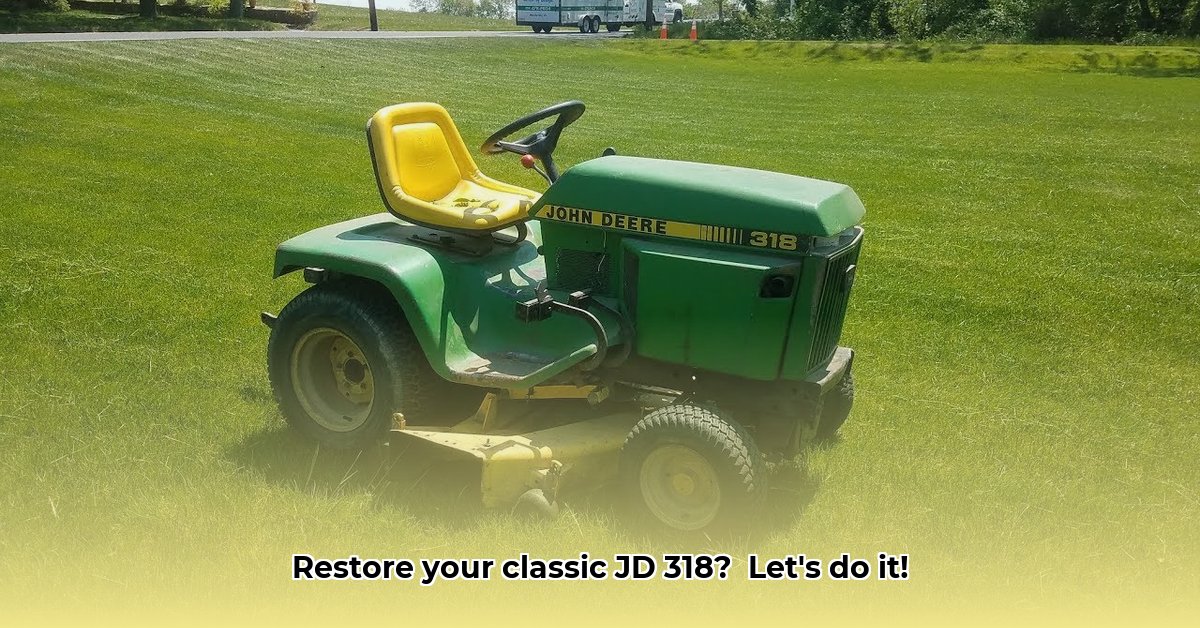
JD 318 Garden Tractor: Revitalizing Your Green Machine
Ready to breathe new life into your John Deere 318 garden tractor? This iconic machine, a symbol of robust engineering produced between 1983 and 1992, deserves the care necessary to keep it running smoothly for years to come. This comprehensive guide will take you through everything from routine maintenance to more involved repairs, providing step-by-step instructions and expert advice. We'll also explore the rich history of the 318, celebrating its enduring legacy. For more JD 318 resources, check out this helpful website: JD 318 resources.
Preventative Maintenance: Keeping Your JD 318 in Top Shape
Preventative maintenance is the cornerstone of long-term tractor health. Regular checks and maintenance will save you time, money, and frustration in the long run. Think of it as a vital checkup for your hardworking machine.
Oil Changes (Every 50 hours of operation): This is crucial for engine lubrication. Use the oil type and amount specified in your owner's manual. Regular oil changes are vital for optimal engine performance and longevity. Neglecting this critical step can lead to premature engine wear.
Air Filter Inspection (Monthly): A clean air filter ensures optimal engine performance. A clogged filter restricts airflow, decreasing efficiency and potentially damaging the engine. Replacing the filter is a simple fix with major impact on engine performance. A dirty air filter can reduce engine power by up to 15%.
Spark Plug Inspection (Every 100 hours): These ignite the fuel-air mixture. Worn or fouled spark plugs result in poor starting, rough running, and decreased fuel efficiency. Inspect and replace them if necessary. New spark plugs often dramatically improve starting and engine smoothness.
Belt Examination (Visual check monthly): Belts drive various tractor functions. Regularly inspect them for cracks, fraying, or wear. Timely replacement prevents costly breakdowns. A broken belt can halt operation entirely.
Fluid Level Check (Weekly): Maintain proper levels of hydraulic fluid (for attachments and the lift system) and coolant (if applicable). Low fluid levels can lead to serious damage. Low fluid levels can lead to critical component failure.
Troubleshooting Common JD 318 Issues: DIY Solutions
Many common problems are easily fixable with basic tools and know-how. Before seeking professional help, try these troubleshooting steps:
Refusal to Start: Check battery connections for corrosion; inspect spark plugs and fuel supply. Often, a simple fix solves the problem.
Rough Engine Operation: A rough-running engine may indicate a dirty air filter, faulty spark plugs, or carburetor problems. Address these issues accordingly.
Hydraulic Issues: Low hydraulic fluid is common if your hydraulics are not performing as expected. Address any leaks immediately.
Sourcing Parts: Finding the Right Components
Finding parts for a classic tractor can be a challenge, but several avenues exist.
John Deere Dealers: While they may not stock all parts for older models, they represent the best source for genuine parts ensuring quality and fit.
Online Marketplaces (eBay, Amazon): A vast selection exists, but carefully check seller ratings and inspect images thoroughly before purchasing to minimize the risk of counterfeit or incompatible parts.
Specialty Parts Suppliers: Several companies specialize in parts for vintage and classic John Deere tractors like the 318. Research to locate these specialized suppliers.
Online Forums and Communities: Online communities dedicated to classic tractors offer invaluable advice and connections to other owners who may have parts for sale.
Restoring Your JD 318: A Step-by-Step Guide
Restoring a JD 318 is a rewarding, but involved process, requiring patience and attention to detail.
Thorough Assessment: Meticulously assess the tractor's condition, noting all repairs and replacements needed.
Meticulous Disassembly: Carefully disassemble the tractor, documenting each step with photos or videos. Thoroughly clean each part. Organization is crucial for successful reassembly.
Repair and Replacement: Repair or replace damaged or worn components using high-quality parts.
Careful Reassembly: Reassemble the tractor, following your documented steps. Double-check your work at each stage.
Complete Testing: Thoroughly test all functions before resuming operation.
JD 318 Ownership: Weighing the Pros and Cons
| Pros | Cons |
|---|---|
| Robust build quality; designed for longevity | Parts sourcing may require more effort |
| Powerful engine; capable of heavy work | Specialized maintenance knowledge may be needed |
| Versatile attachments; adaptable to various tasks | Repair costs might exceed those for newer models |
| Classic design; a collector's item | Restoration is time-consuming and labor-intensive |
Restoring your JD 318 is an investment in a piece of history. With patience, dedication, and this guide, you can bring this classic machine back to its former glory. Remember, the reward of owning and operating a restored JD 318 is truly immeasurable.